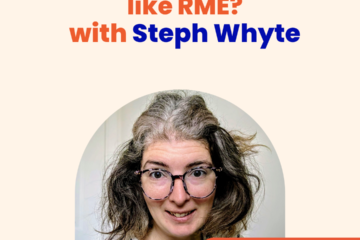
How to Solve a Problem like RME? Steph Whyte, LearningRMPS

The face behind the STARME emails, normally seen running around the Festival of Learning making sure everything is running smoothly. This year Steph is sharing her recent research in RME and the findings from her podcast ‘What Even is RME?’. What to expect in this Session? Following a year-long research Read more

By STARMEadmin, ago

A Time for Reflection – A Response to Children (Withdrawal from Religious Education and Amendment of UNCRC Compatibility Duty) (Scotland) Bill.

On February 17th, 2024, as faith communities across Scotland entered seasons of reflectionโ€”Ramadan for Muslims and Lent for Christiansโ€”the RME community reached a landmark of its own. With the passing of the Children (Withdrawal from Religious Education and Amendment of UNCRC Compatibility Duty) (Scotland) Bill, the landscape of our classrooms has fundamentally shifted.

For years, the “withdrawal clause” acted as a symbolic barrier, often conflating academic Religious Education with Religious Observance. By allowing students to be opt-out of the subject, the system inadvertently framed RME as a confessional activity rather than an academic discipline.

The Turning Point
That era has ended. As stated on the Scottish Government website:

โ€œIt is no longer possible to withdraw from RME.โ€ (Scottish Government, 2026)

This change is not just a policy update; it is a validation of RMEโ€™s legitimacy. We are moving away from the precarious positioning of the 1960s and the “conscience-based” absences of the 1980s toward a pluralistic, robust curriculum that reflects modern Scotland.

Looking Ahead
Following in the footsteps of Wales, Scotland is now tasked with ensuring our curriculum is fit for a nation where traditional religious identification is evolving. As we enter this “Curriculum Improvement Cycle,” one thing is clear: RME is no longer an optional extra. It is a necessary, academic, and vital tool for understanding the complex world our learners inhabit.
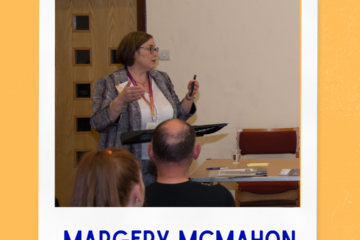
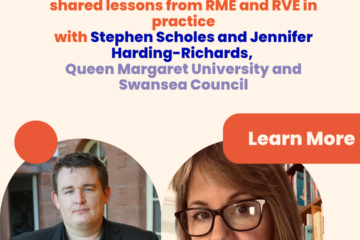
By STARMEadmin, ago

STARME Response to STARME: Position Statement on Future Inspection Frameworks and Inspectorate Practice

STARME is calling for fundamental reform of inspection practices for Religious and Moral Education (RME) and RERC. Inconsistent inspection is undermining the legal status of RME/RERC, leading to widespread non-compliance in Scottish schools.

Our position statement demands that future frameworks must guarantee Specialism, Clarity, Consistency, and acknowledgment of Systemic Challenges to finally secure high-quality, statutory religious education.

Read the full paper to see STARMEโ€™s four non-negotiable principles for the future of the inspectorate and RME/RERC provision.

By STARMEadmin, ago

Action Required – Stage 2 – Children (Withdrawal from Religious Education and Amendment of UNCRC Compatibility Duty) (Scotland) Bill

Despite broad support from the Equalities Committee and MSPs for decoupling Religious and Moral Education (RME) from Religious Observance (RO), the Children (Withdrawal from Religious Education and Amendment of UNCRC Compatibility Duty) (Scotland) Bill still threatens RME’s status. The core problem remains: the outdated right of withdrawal from RME is still retained, treating a core, non-confessional academic subject like an optional, confessional activity.

STARME is issuing an urgent call to action: We need every member to contact their MSPs now to ensure Stage 2 amendments are lodged and supported to remove the right of withdrawal from RME entirely. This is the critical window to safeguard the future integrity and mandatory nature of RME for all Scottish pupils.

By STARMEadmin, ago

URGENT: The Voice of RME Teachers Must Be Heard on the Children (RME Withdrawal) Bill

Critical Deadline: Stage 1 Debate is November 25th! The Stage 1 debate on the Children (Withdrawal from Religious Education and Amendment of UNCRC Compatibility Duty) (Scotland) Bill is scheduled for Tuesday, November 25, 2025. This means we have a matter of days, to ensure the professional voice of Religious and Read more

By STARMEadmin, ago

Help Build the RMPS Teacher Toolkit: Research on Closing the Gap and Raising Attainment

STARME member Gillian Dunsmuir is currently undertaking a Farmington Institute Research Scholarship with a focus on โ€˜Raising Attainment and Closing the Gap in Senior Phase RMPSโ€™. Expanding on her insights from the Festival of Learning, Gillian aims to produce a practical Teacher Toolkit based on effective learning and teaching approaches in RMPS classrooms across Scotland. To make this a valuable, national resource, she would love to hear from as many colleagues as possible! Share your effective strategies and good practice via the survey below. All strategies shared will be fully credited. The survey is accepting responses until the 12th of December.

By STARMEadmin, ago
books in black wooden book shelf

New Journal Article – The Marginalization of Religious Education: Solutions for a Shared Challenge from Scotland

Stephen C. Scholes (2025): The Marginalization of Religious Education: Solutions for a Shared Challenge from Scotland, Religious Education, DOI: 10.1080/00344087.2025.2541484 This journal article by Dr Stephen C. Scholes, Senior Lecturer in Education at Queen Margaret University, investigates the marginalization of Religious Education (RE) in Scottish schools, building upon international discussions within Read more

By STARMEadmin, ago

A religion and worldviews approach to RME/RE by Fiona Moss

In this insightful session, Fiona Moss, Education and Programs Manager for Culham St Gabriel’s, delves into the “religion and worldviews” approach to Religious and Moral Education (RME) and Religious Education (RE). Drawing on her extensive experience, including her past roles with RE Today and the National Association of Teachers of RE, Moss outlines the origins and key tenets of this evolving pedagogical framework. She highlights its continuity with established scholarship (e.g., Robert Jackson, Andrew Wright) while emphasizing its departure from the traditional “world religions paradigm” to better reflect diverse lived experiences and changing demographics. The discussion differentiates between organized and personal worldviews, using compelling examples like the “Picturing Islam, Picturing Muslims” resource to illustrate the practical application of this approach in challenging stereotypes and fostering deeper understanding. Moss further explores substantive content and pedagogical methodologies, offering concrete examples, such as how to move beyond superficial mosque studies to a more nuanced exploration of location, voices, and diversity. The session concludes with practical advice on language use in the classroom and the importance of acknowledging the messy, overlapping nature of real-world beliefs, demonstrating how this approach empowers pupils to become responsible interpreters of diverse worldviews.

By STARMEadmin, ago