A Time for Reflection – A Response to Children (Withdrawal from Religious Education and Amendment of UNCRC Compatibility Duty) (Scotland) Bill.
by Terri Barry, Research and Policy Lead, STARME
February 17th 2026 was a significant date in the RME world. Muslims welcomed in Ramadan with the first Isha and Taraweeh prayers and Christians celebrated Shrove Tuesday beginning Lent. Both of these are times of reflection and the RME community may find it can follow suit, no matter their worldview, with the passing of the Children (Withdrawal from Religious Education and Amendment of UNCRC Compatibility Duty) (Scotland) Bill. Whilst the core purpose of this was centred around the UNCRC it did not go unnoticed that the conflation of Religious Observance and Religious Education caused controversy and, by many, was not suitable for the curriculum and delivery offered in schools today. STARME proudly fought for recognition that Religious Observance and Religious Education are separate primarily on the basis that Religious Education is an academic subject; not a place where young people are expected to follow a particular worldview. With the support of others within and beyond the teaching community this has now become a reality. The following sentence, short in length but not in significance, now appears on the Scottish Government website:
“It is no longer possible to withdraw from RME.” (Scottish Government; 2026)
In this moment of change we can reflect on two things; how far have we come and where are we headed?
How far have we come?
If we journey back to the 1960’s RE was in a precarious position, despite the requirement to be offered to all children in public schools. There was very much a battle on to recognise RE as an academic subject. When the GTCS was first established RE was not a subject in which you could get teacher certification, subsequently meaning that training was to teach RE was sparse. In addition RE was not distinctly recognised as a subject to be taught in primary schools. (Matemba; 2014)
Moving forward to the 1980’s The Education (Scotland) Act 1980 established that RME must be provided in all public schools, but crucially, it also gave parents the legal right to withdraw their child from RME (and religious observance). This right was maintained in the Curriculum for Excellence (CfE) framework we currently work within. The right to withdraw in non-denominational schools stems from the principle of freedom of conscience and belief. It has been argued that the continued presence of the withdrawal clause can undermine RME’s legitimacy as an academic subject. Nixon says “The right to withdraw symbolically marks RME as a confessional rather than an educational endeavour” (2018)
Where are we headed?
Scotland is the second nation within the United Kingdom to remove the right to withdrawal for RE, with Wales being the first when it removed the right to withdrawal when they introduced a new pluralistic Religions, Values and Ethics curriculum. (Welsh Government; 2021) At a time when Scotland is undergoing its own curriculum review this new reality, that no student can be withdrawn from RE, is incredibly timely. Wales had to go through a period of transition to ensure that its curriculum met the needs of all and their focus centred around the ideology that it must be “pluralistic”. (Barnes; 2025) The pluralistic nature of Scotland is evident in the Scottish Census (2022) which directs some focus around the relevance and value of RME with a decline in those associating as religious; certainly, in terms of identifying with a traditional religious organisation. The pluralistic picture in our nation of Scotland is not dissimilar to elsewhere and so the new curriculum will need to be robust and appropriate for the context in which it finds itself. I am sure many teachers will be looking to this curriculum to be one which fits the needs of the learners we have in front of us today, and beyond.
Key Takeaways
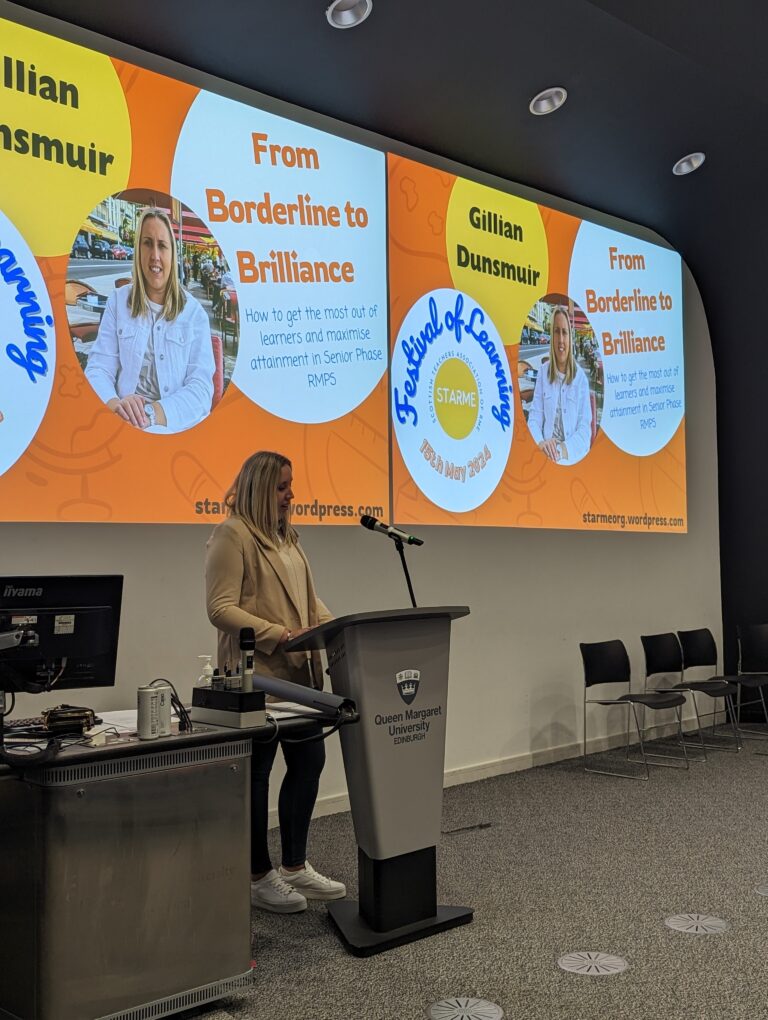
Ultimately the removal of the right to withdraw highlights the importance of RE. Where previously we might have been seen to be unnecessary (because if children can be withdrawn from then how important can it be?) it is now clear it is a necessary part of the curriculum. This, again, is timely with the Curriculum Improvement Cycle reforming the RE curriculum. As Ollie Bray, Strategic Director, Education Scotland said in his Keynote Address at the Festival of Learning 2025 and reiterated in a recent interview on What Even is RME? RME is the only subject, that explicitly allows young people to explore issues like belief, ethics, identity, values in an explicit way. It allows young people to critically reflect and allows them a ‘structured space to have dialogue about difference’. It reinforces that RE has a firm place and is arguably more important than ever.
In our discussions with Scottish Government representatives we have reiterated that alongside the guidance for Religious Observance, there needs to be a refreshed guidance document to provide guidance on RME, what the entitlement is and what RME should be.
References:
Barnes, L. P. (2025). Religion, values and ethics: transformational religious education in Wales? British Journal of Religious Education, 47(4), 584–596. https://doi.org/10.1080/01416200.2025.2451041
Matemba, Y. H. (2014). Problems, survival and transformation: religious education in Scotland – a historical review, 1962–1992. History of Education, 43(4), 542–560. https://doi.org/10.1080/0046760X.2014.919666
Nixon, G. (2018). Nixon, G. (2018b). The Crisis of Identity in Religious and Moral Education in Scotland. Journal of Beliefs & Values, 39(4), 483–497
Welsh Government. (2021) Curriculum for Wales: Religion, values and ethics guidance – Consultation document. Cardiff: Welsh Government. Available at: https://www.gov.wales/sites/default/files/consultations/2021-05/consultation-document-curriculum-for-wales-religion-values-and-ethics-guidance.pdf (Accessed: 2 March 2025)
Scottish Government (2026) Strengthening young people’s rights. gov.scot, 18 February 2026. Available at: https://www.gov.scot/news/strengthening-young-peoples-rights/ (Accessed: 20 February 2026)