RMPS in the News: The World Cup – Unity, Identity; Ethics

As the FIFA World Cup captures global attention, millions of people come together to watch, celebrate and support their teams. Streets, homes and classrooms are filled with conversation, excitement and, at times, tension.
While it is often seen as just a sporting event, the World Cup offers something more. It is a global moment where questions of identity, belonging, fairness and shared humanity come into focus, making it highly relevant for RMPS.
Why does this issue matter?
This raises important RMPS questions:
The World Cup highlights both unity and division. It brings people together across cultures, languages and beliefs, yet it can also expose inequalities, political tensions and ethical concerns surrounding hosting, treatment of workers and inclusion.
- What does it mean to belong to a nation?
- Can sport bring about unity, or does it reinforce division?
- How should we respond to injustice, even in something we enjoy?
How can I use it in the classroom?
The World Cup is an accessible and engaging context for learners, making it a powerful starting point for discussion.
Possible Discussion Questions:
- Why do people feel such a strong connection to national teams?
- Is it possible to celebrate national identity without excluding others?
- Should ethical concerns affect whether we support or engage with global events?
- What values are shown in sport, and are they always followed?
Activity Examples (adaptable)
Check out the PDF attachment at the end as well to help you get started!
1. Identity Map Activity
Learners create a map of their own identity (nationality, beliefs, interests, values).They compare this to how fans identify with teams and discuss: What shapes who we feel we are?
2. Fair Play vs Reality
Explore the idea of “fair play” in sport. Learners investigate:
- What does fairness mean in football?
- Does this reflect fairness in society?
Link to moral values such as justice and equality.
3. Ethical Debate
Present a statement: “We should boycott sporting events if there are human rights concerns”.
Learners take positions and justify their views using ethical reasoning.
4. Religion and Sport Reflection
Explore how different religions promote values like respect, discipline and community.
Learners consider:
- Are these values visible in global sporting events?
- Where do we see them, or not?
Impact on learning
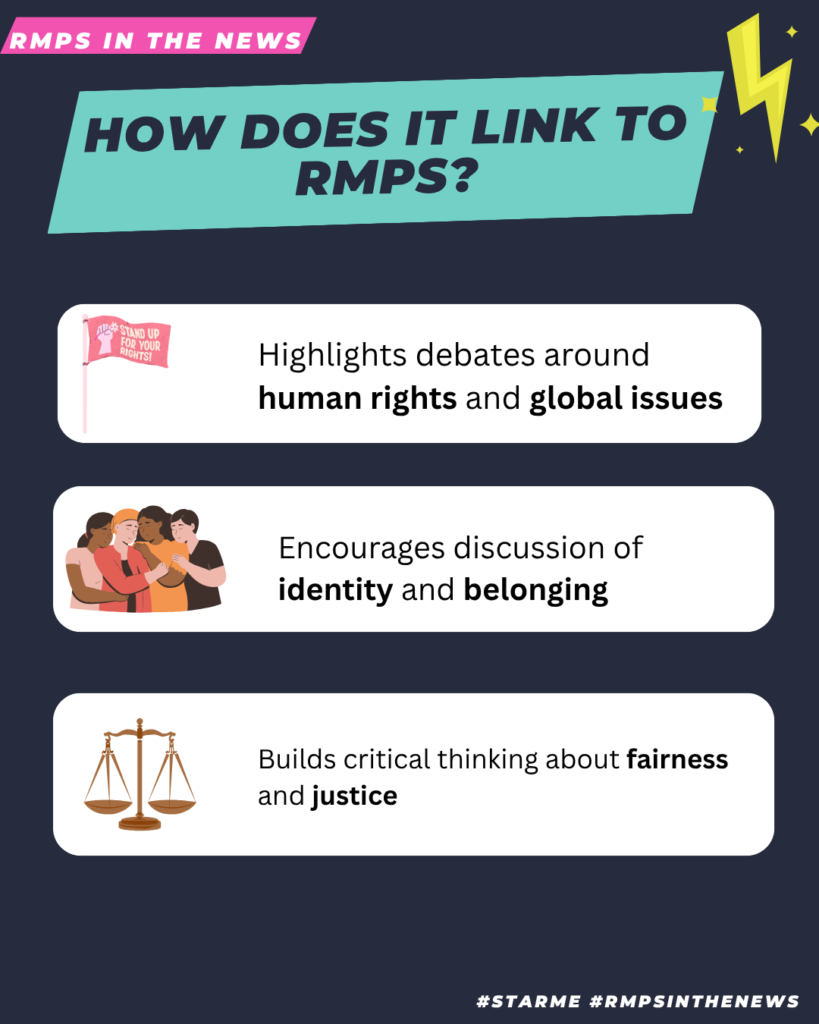
- Encourages discussion of identity and belonging
- Develops awareness of global issues and ethics
- Builds critical thinking about fairness and justice
- Creates opportunities for inclusive, relatable learning
It also reinforces that RMPS is not separate from everyday life. It helps us understand the values behind the things we care about.
Relevant Links
Iran’s World Cup Team Lands in Mexico amid US Visa Row
Last-Minute Visas and Moving Training Camp: Iran’s Road to the World Cup
Global: FIFA Needs to Act on Human Rights